Origin
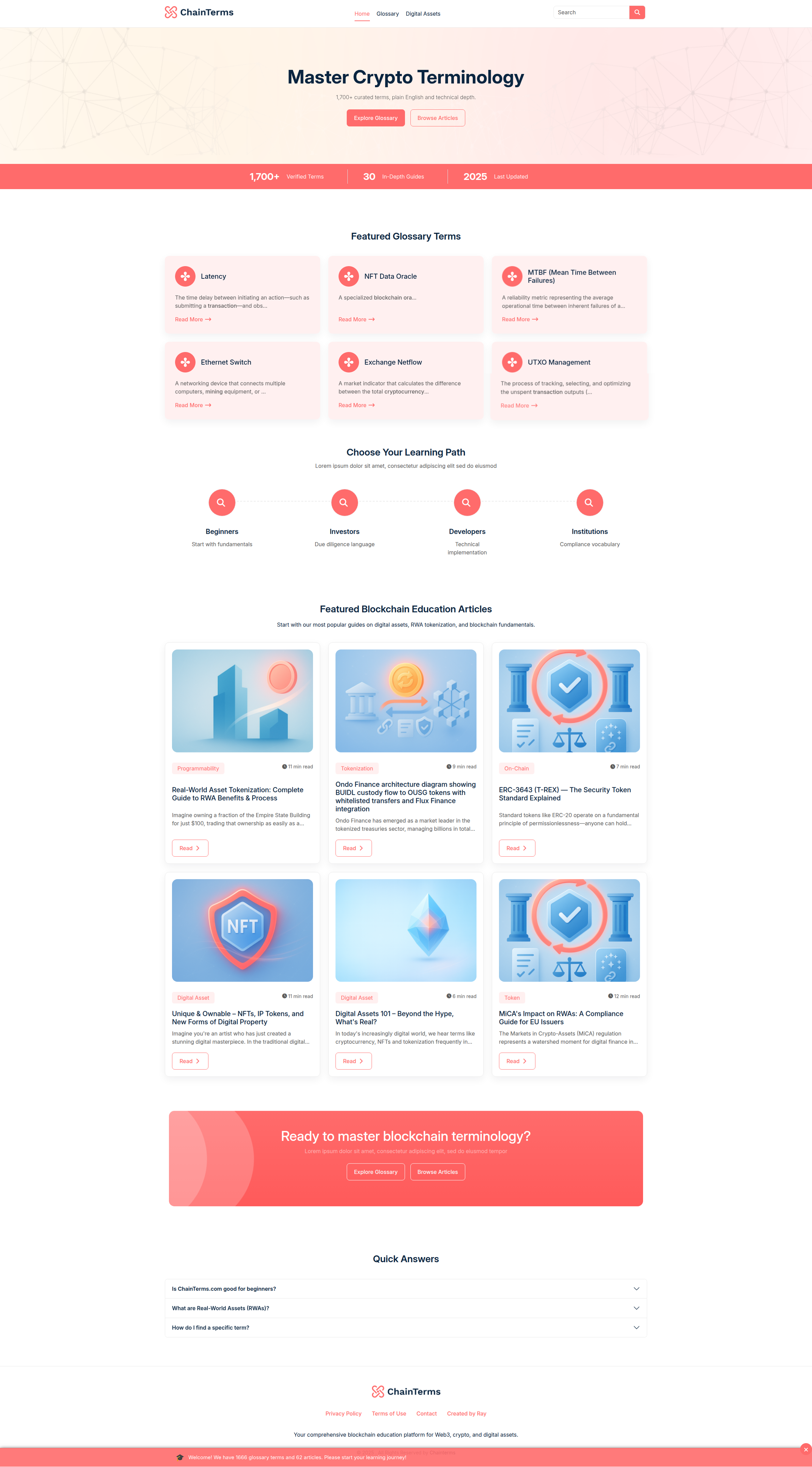
Most of the blockchain "definitions" online are either vague marketing fluff or copied from each other with zero accuracy. When I was building across different chains, I kept running into inconsistent terminology, outdated explanations, and jargon that made things more confusing. ChainTerms exists because technical ecosystems need clarity, not buzzwords. A place where builders can rely on clean, accurate definitions without wasting time on guesswork.
Key Systems
Three systems that make the glossary useful beyond lookups.
Connected Glossary
Every term is written for people who actually build, not for SEO, not for hype. 1,700+ definitions with cross-referencing that links related concepts and categories, so looking up one term naturally leads you to the next thing you need to understand. The glossary feeds directly into tools like ChainDecode that analyze contracts across these chains.
Learning Paths
New standards, new chains, new terminology. The glossary is updated as the ecosystem moves, so definitions reflect what builders are actually working with right now.
Article System
Beyond short definitions, ChainTerms includes 30+ in-depth articles that break down advanced concepts into something readable and practical — useful when a glossary line isn't enough.
In Action
Selected Writing
RWAs Meet AI: Underwriting, Valuation, and Autonomous Management
How artificial intelligence automates the complex lifecycle of real-world assets on-chain. Read article →
Designing On-Chain Governance for RWAs
Voting models and decision rights for managing tokenized physical assets. OpenWord applies on-chain governance to publishing. Read article →
The Geopolitics of Tokenization
Navigating cross-border investment, sanctions, and regulatory friction in a tokenized world. Read article →